I thought I knew expensive. Then I went through the fees for international schools in Singapore using Expateur’s School Finder (opens in a new tab) and had to double-check whether those numbers were really per year. They were. I was hoping for a typo.
At half the schools I checked, fees start above S$30,000 a year. At more than half, they climb past S$40,000 as kids get older. That’s per child, before uniforms, transport and all the extras. If you have two or three kids, looking at alternatives starts to make a lot of sense.
My best friend here is an Aussie mum of two, so I’ve heard plenty of “Wait, that’s extra?” over the years. It got me curious about what other options families have. So I looked through parents’ experiences in expat groups and checked the fees and requirements against official school and government websites.
The good news? There are more affordable options. Each has its own trade-offs, though, so I’ve rounded up six worth considering, what they cost and what to know before you apply.
Key takeaways
- International school tuition in Singapore runs from about S$13,000 to more than S$60,000 a year. About half of the schools in our School Finder (opens in a new tab) start above S$30,000.
- The lowest-fee international schools start at about S$13,000 to S$25,000 a year.
- Local primary school is the biggest saving, at about S$12,600 a year in 2026. But admission isn’t guaranteed, and the government picks the school.
- Local preschool costs a fraction of the price: about S$6,900 a year for half-day kindergarten, compared with over S$27,000 at most international preschools.
- Tuition isn’t the whole bill. Joining fees, yearly building fees and the school bus can add thousands of dollars.
- If your company is moving you here, ask for help with school fees in writing before you accept the job.
The cheat sheet (yes, this one’s allowed)
Before we get into each option, here’s a quick look at what different types of schools in Singapore cost per child, per year. Prices vary, but this gives you a clear picture of how the costs compare.
Annual school fees per child in 2026, from lowest to highest
- Local preschoolAbout S$6,900
Good fit if: Your child is preschool age and you want a gentle, low-cost start.
- Local primary schoolBiggest savingAbout S$12,600
Good fit if: Your child is primary-school age and you’re staying a few years.
- Lower-fee international schoolsS$13,080 to S$25,000
Good fit if: You want an international curriculum at a lower price.
- Schools that teach in another languageS$20,000 to S$35,000
Good fit if: You want to keep your home language and curriculum.
- Local secondary schoolAbout S$26,500
Good fit if: Your child is already in the local system.
- Well-known international schoolsS$30,000 to S$58,500
Good fit if: You want a big-name school and fees aren’t your main concern.
Grab a coffee for this one (or a glass of wine, depending on how the school search is going 😉). We’ll go through the cheaper alternatives to international schools in Singapore, how much each one costs, the trade-offs, and what to consider when choosing the right option for your family.
Option 1: Local preschool before primary
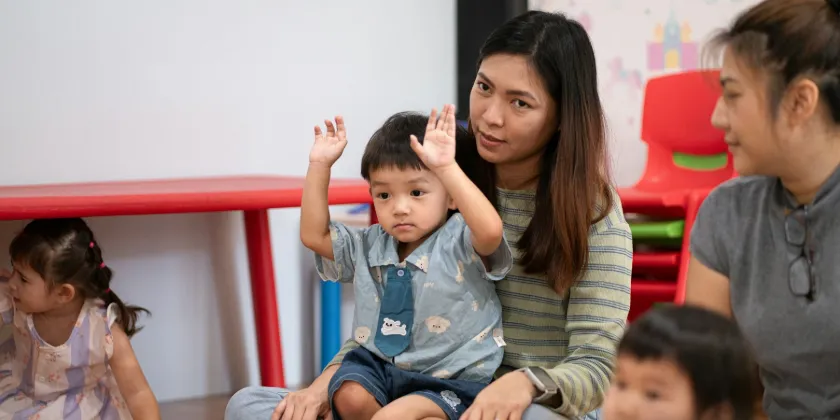
If your little one is somewhere between 3 and 6, this is where you can save the most. Most expat families go with an international preschool, but some start local instead, and the price difference is huge.
International preschools in our School Finder (opens in a new tab) cost about S$19,000 to more than S$45,000 a year. For example, at PCF Sparkletots, one of Singapore’s biggest local preschool chains, a foreign child pays about S$6,900 a year for half-day kindergarten in 2026, or about S$15,300 for full-day childcare. And that’s already the full price. Singapore’s government discounts on preschool fees are mainly for citizens, so expat families pay the regular rate.
Here’s the best part: even two or three years at local prices can save you tens of thousands of dollars before primary school starts, and your child can still move to an international school later. Most local preschools teach in English, with Mandarin as a second language (a pretty great bonus for little ones). Just a few things to know before you fall in love with one. Popular preschools often have waitlists, and government-run kindergartens (called MOE Kindergartens) put citizens and permanent residents first. Teaching styles also vary a lot, from mostly play to lots of worksheets, so visit a few and choose one close to home.
Option 2: Local primary and secondary schools
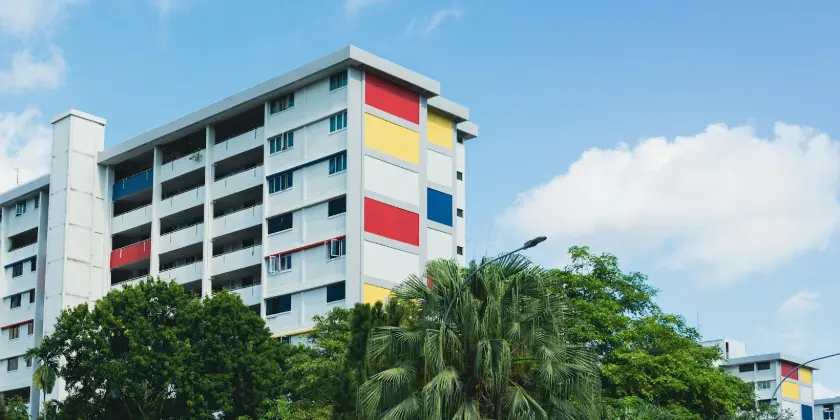
Local schools are Singapore’s government schools, run by the Ministry of Education (you’ll see it called MOE everywhere). Think of them like public or state schools back home. Most expat families go the international school route, but some choose local for the lower fees and a real taste of everyday Singapore life. And yes, your child can attend, even if you’re not a citizen.
So what does it cost? In 2026, local primary school is S$1,035 a month for a child from outside Southeast Asia, plus a small monthly fee for school activities (called the miscellaneous fee). That works out to about S$12,600 a year per child, before uniforms, meals and getting to and from school.
One quick note on that price, because it depends on your child’s passport. Children from ASEAN countries pay less. ASEAN is the group of Southeast Asian countries that includes Singapore and its neighbors, like Malaysia, Indonesia, Thailand, Vietnam and the Philippines. If your child is American, British, Australian, Canadian or European, the higher international rate applies, and that’s the price we use here. Children who are Singapore permanent residents (people allowed to live here long term) pay a different rate again.
Local school fees for international students
| Level | Monthly school fee in 2026 | About per year, with the miscellaneous fee |
|---|---|---|
| Primary (ages 7 to 12) | S$1,035 | S$12,600 |
| Secondary (ages 13 to 16) | S$2,190 | S$26,500 |
| Pre-university (ages 17 to 18) | S$2,540 | S$30,800 |
Here’s the honest math. Local primary school can save you a lot. Secondary school is a different story, at about S$26,500 per child a year. At that price, some lower-fee international schools cost about the same, or even less.
How to apply
Your child can apply, but getting in isn’t guaranteed. Singapore citizens and permanent residents always come first, and international students are offered admission only when there’s room. Here’s how it works:
- If your child is starting primary school: You apply through MOE, usually around May, for school starting the next January. The first year of primary school is called Primary 1, and it’s for children turning 7 that year.
- If your child is joining a later school year: They’ll usually sit an entrance test called the AEIS (short for Admissions Exercise for International Students). For primary school, your child first needs a passing result on an approved English test, then takes a Maths test. For secondary school, they take both English and Maths.
- If you miss the main round: There’s a smaller second round called the S-AEIS (the S stands for supplementary). It’s only open for some school years, and children who pass join partway through the school year.
The part nobody loves: you don’t get to pick the school. If your child gets in through the AEIS, MOE chooses the school for you, and you can’t ask to switch. You won’t see their test scores either. One Canadian mum waited more than ten weeks, only to find out her son hadn’t been accepted. So while you wait, keep another school option open. Trust me, you’ll sleep better.
What parents love
- Strong maths. Singapore is known around the world for how it teaches maths.
- Shorter days. Primary school often finishes in the early afternoon.
- Mandarin. Little ones often pick it up surprisingly fast.
- Close to home. There’s usually a local school nearby, often with classmates from many countries.
- The price. Much lower than most international schools.
What parents find tough
- Mother Tongue. Every child learns a second language, usually Mandarin, Malay or Tamil, and it counts in the big end-of-primary exam (the PSLE). Children who join later are sometimes excused, so ask MOE early.
- Bigger classes. Around 30 kids per class, and marking can feel strict.
- The first year. Breaks are short, so friendships often grow through weekend playdates.
- Teenagers. Joining in secondary school is hard, and some students repeat a year.
- No guarantee. If your child isn’t accepted, you’re back to international school fees.
Option 3: Lower-fee international schools
Here’s what most newcomers don’t realize: not every international school costs a fortune. Tuition in Singapore runs from about S$13,000 to more than S$60,000 a year, so cheaper schools really do exist. You just have to know where to look.
Here are the schools with the lowest tuition in our School Finder (opens in a new tab) (prices last updated October 2026):
International schools with the lowest tuition
| School | Where | Ages | Tuition per year |
|---|---|---|---|
| Knightsbridge House International School | Bukit Merah and Changi | 5 to 18 (Changi to 14) | S$13,080 |
| Astor International School | Tanglin | 5 to 12 | S$17,400 |
| The Grange Institution | Yio Chu Kang | Primary only | S$21,390 |
| Middleton International School | Tampines | 4 to 17 | S$22,527 to S$29,666 |
| Invictus International School | Dempsey Hill and Farrer Park | 5 to 18 | S$23,806 to S$28,969 |
| One World International School | Jurong and Punggol | 3 to 18 | S$24,158 to S$33,168 |
What parents say about lower-fee international schools
Lower fees usually come with a few trade-offs. Parents often mention smaller campuses, less outdoor space and fewer specialist teachers (like dedicated music or sports teachers). Some also worry about teachers leaving often. It really varies by school, so ask about all of this when you visit.
Also ask how much fees go up each year. One parent reported a rise of around 10% at one school, and that adds up fast if you’re planning to stay a while.
The good news? Plenty of parents are really happy with their choice. Some enrolled while waiting to get into another school, then stayed because their kids had settled in, made friends and were thriving. And once that happens, switching schools suddenly feels a lot less appealing.
Looking for a school that’s right for your child and your budget? Use our School Finder (opens in a new tab) to compare international schools in Singapore by age, curriculum and fees.
Option 4: Schools that teach in another language

Does your child already speak French, German or Dutch? Then this one’s worth a look. Schools that teach in those languages often cost less than many of the big British and American schools, and they make it easier for your child to slip right back into school if you move home. Here’s what a year of tuition costs at a few of them:
- Swiss School in Singapore (German or French, with English): S$20,000 to S$30,400, up to Primary 6 (around age 12)
- International French School: S$24,305 to S$35,325
- Holland International School (Dutch or English stream): S$26,563 to S$30,516, up to age 12
- German European School Singapore: from S$33,860
The catch? Your child needs to speak the language, since most lessons are taught in it. Some of these schools also put families from their own country first, so ask early. And watch the one-time fees when you join. At the Swiss School, the joining fees (registration, land use and a first-year building fee) add up to about S$12,600 before you’ve paid a single dollar of tuition.
If you’re French, a heads-up: fees may keep climbing. A 2026 news report (opens in a new tab) says French schools abroad are passing more of their teachers’ retirement costs on to parents, and some French families are switching to local school or to CNED, the French government’s official online school.
Option 5: Online school or homeschooling

Here’s something a lot of newcomers don’t know. Singapore has a law that says children must go to school (it’s called the Compulsory Education Act), but it only applies to Singapore citizens. So as an expat family, you’re free to choose an online school or homeschool instead. This is most popular with teens who are partway through exams from back home, like the UK’s GCSEs (taken around age 16), and with families who are only here for a year or two.
If you go this route, just make sure the online school is accredited, which means it’s officially recognized. That way, your child’s school years still count when you move home. British parents recommend one that works with UK exam boards (the organizations that set and mark exams like GCSEs). If you’re American, look for an online school accredited in the US.
The biggest trade-off parents mention? Missing out on the school community. Your kids won’t have classmates to see every day, and you won’t have other school parents to connect with. Sports, classes and playdates can help fill that gap, but those extras add up too.
It also usually means one parent needs to stay home to teach the kids.
Option 6: Ask your employer about a school allowance

If you’re moving here for work, this one could save you the most, and it all comes down to one moment: your job offer. That’s your best chance to get help with school fees.
Some employers offer an expat package. That’s extra support on top of your salary when a company moves you to another country, and it can cover things like housing, school fees and flights home. Full packages are rarer than they used to be, and these days they mostly go to people whose company transfers them here from overseas.
A survey by ECA International (opens in a new tab), a firm that researches expat pay and benefits, found that 81% of companies help with school fees for employees they send abroad long term. But if you’re hired directly by a company in Singapore (often called being hired on local terms), help with school fees is much less common.
So ask before you sign, even if your kids are still little. Here’s what to find out:
- Is there a school allowance, and how much is it per child?
- What does it cover? Just tuition, or joining fees, building fees and the school bus too?
- How long does it last?
- Is it taxed? School fees your employer pays are generally counted as taxable income in Singapore (opens in a new tab), so ask if they’ll cover the tax too.
Then get it all in writing. Once you’ve signed, it’s much harder to negotiate.
Oh, and if you or your partner are a teacher, this one’s for you. Some international schools offer free or discounted tuition for teachers’ children. A few parents online said that perk is what convinced them to go back to teaching. With school fees here, can you blame them?
What to watch out for (the stuff they leave out of the brochure)
Tuition is only part of the bill. Before your child even starts, many schools charge fees just to apply, to test your child and to confirm their enrollment. Some also add a yearly building fee on top of tuition. Here’s what that looks like at three schools for the 2026-27 school year:
One-time joining fees and yearly fees
| School | One-time joining fees | Yearly fees on top of tuition |
|---|---|---|
| Tanglin Trust School | S$10,000 (application S$1,000, enrollment S$4,500, facilities charge S$4,500) | Building fee of S$6,270 (tuition is S$30,030 to S$51,810) |
| One World International School (Punggol) | S$1,420 application fee | Building fee of S$7,291 |
| Invictus International School | S$2,943 (to apply, for the entry test and to enroll) | About S$740 for materials, tech and fee insurance |
And it doesn’t stop there. Here are the other costs parents say catch them off guard:
Other yearly and one-time costs to budget for
| Cost | How often | What to expect |
|---|---|---|
| School bus | Yearly | About S$3,000 to S$5,500 a year for door-to-door pickup and drop-off. At One World, it’s S$3,179 to S$5,444. |
| Lunches | Every school day | Often not included in tuition. |
| School trips | Each trip | Often extra, and some schools require certain class trips. |
| Exam fees | In exam years | Often charged separately, especially in the last years of high school. |
| Extra language classes | Each term or year | Often extra, for example English support for kids who need it. |
| Holding deposit | One-time | Some parents pay a deposit at one school so they don’t lose the offer while they wait to hear from another. Ask if you get it back. |
Local schools have extra costs too, like uniforms, books, activities and possibly the AEIS test fee, but they’re much smaller.
Want to see the full cost, school by school? Here’s the easiest way to check:
Money-saving moves parents swear by
Here are the moves that make the biggest difference, starting with the ones to do before you even move:
- Work out your school budget first. Before you fall for any school, look at your take-home pay and decide how much you can comfortably spend on school fees each year, after rent, bills and savings. That number becomes your filter, so you only tour schools you can actually afford.
- Make sure the move makes sense before you say yes. Before you accept a job offer or sign a lease, add up what life here will really cost: school fees, rent, transport and everyday spending. A bigger salary on paper doesn’t always mean you’ll be better off. The goal is for Singapore to leave your family in a better spot than you’d be in back home, and our Cost of Living Calculator (opens in a new tab) makes that easy to check.
- Pick the school first, then your home. Ideally, you want to live close to your child’s school. A long daily commute is tiring for kids and a hassle for you, and the school bus alone can cost thousands a year. Once you have your shortlist, our Neighborhood Finder (opens in a new tab) helps you find areas near the school that also fit your budget and your commute to work.
- Start with a local kindergarten if you’re hoping for local primary later. It costs far less than an international preschool, your child gets used to the local style of teaching, and they get a head start on Mandarin, which helps with Mother Tongue later. Just know it doesn’t guarantee admission to a local primary school, since international students are only offered admission after citizens and permanent residents.
- Go local for primary, then rethink at secondary. This works best if your child starts young (under about 9), you’re staying at least three years and you’re happy with the local system. Primary is where local school saves you the most. Secondary costs much more for international students (about S$26,500 a year), so around Primary 5 or 6 is a good time to compare it with lower-fee international schools again.
- Use a lower-fee school as a stepping stone. If your first-choice school has a waitlist, or you’re waiting to hear back on a local school through the AEIS test, you can enroll your child at a lower-fee international school in the meantime. That way, they’re settled and learning while you wait, and plenty of families end up happy and stay. Before you sign, ask how much notice you need to give if you leave and whether your deposit is refundable.
- Ask about sibling discounts. If you have two or more kids, some international schools take a little off the tuition for the second or third child. Ask how much it is and whether it applies to tuition only or to other fees too.
- Buy second-hand uniforms. Kids grow fast, and new uniforms aren’t cheap. Many schools have a parent association that sells gently used uniforms, and you’ll often find them in school parent Facebook groups or on Carousell, Singapore’s popular buy-and-sell app.
Now, what about the years ahead? School fees come back every single year, and university comes right after. Here’s how to plan for all of it without putting your own future on hold:
Your next three steps
Here’s your homework (the fun kind, promise):
- Find your shortlist. Open the School Finder (opens in a new tab), filter by your kids’ ages and your budget, and see which schools are actually within reach.
- Check the full budget. Run your numbers through the Cost of Living Calculator (opens in a new tab) to see what school fees, rent, groceries and everything else add up to each month.
- Ask before you tour. Email your top three schools and ask how much fees went up in each of the last three years, what isn’t included in tuition, and whether there’s a waitlist for your child’s year group.
You’ve totally got this. Refill that coffee (or that glass of wine), knock out your three steps, and you’ll be well on your way to a school that feels right for your kids and your budget.
Sources
Official pages, last reviewed November 2026:
- MOE: revised school fees for non-citizens, 2024 to 2026 (opens in a new tab) and MOE: school fees (opens in a new tab)
- MOE: AEIS (opens in a new tab), test details (opens in a new tab), how to apply (opens in a new tab) and outcome and placement (opens in a new tab)
- MOE: S-AEIS (opens in a new tab) and admission for international students (opens in a new tab)
- MOE: Primary 1 registration for international students (opens in a new tab)
- ICA: applying for a Student’s Pass (opens in a new tab)
- Singapore Statutes Online: Compulsory Education Act (opens in a new tab)
- PCF Sparkletots: 2026 fees (opens in a new tab)
- ECA International: education costs in global mobility (March 2026) (opens in a new tab)
- School fee pages: Tanglin Trust School (opens in a new tab), One World International School (opens in a new tab), Invictus International School (opens in a new tab)
- Expateur International School Finder (opens in a new tab) (prices last updated October 2026)
Fees change every year. Always confirm the latest figures with MOE and each school before you decide.